
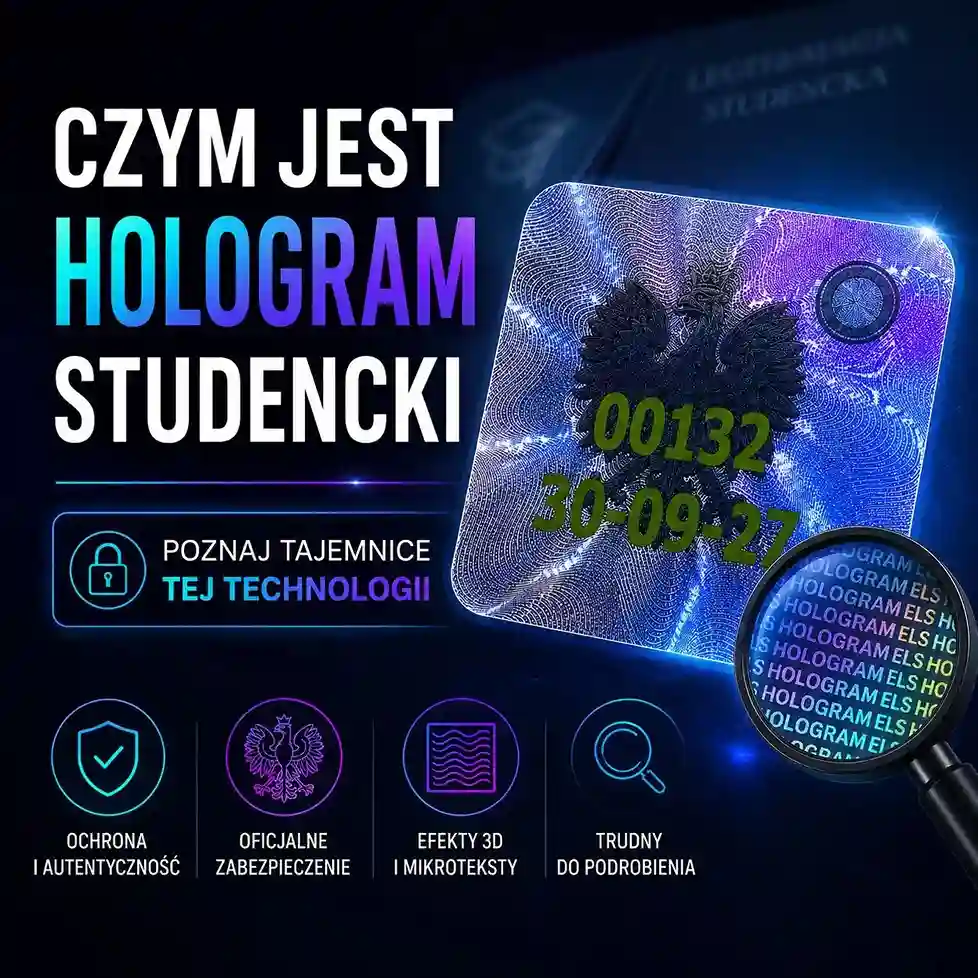
Holography is one of the most fascinating technologies of the modern world, allowing the creation of three-dimensional images. Although it may be associated with science fiction films, in reality it surrounds us in everyday life, from document security to spectacular presentations and concerts. In this article, we will take a closer look at what holograms are, how they work, and where you can encounter them.
A hologram is a three-dimensional image created using the holographic technique, which uses laser light to record and play back an image. Unlike ordinary photographs or 2D images, holograms offer the effect of depth, allowing them to be viewed from different angles. This złmakes them appear almost lifelike and realistic. This technology has applications in many fields, from entertainment to document security.
Hologram creation is based on interference and diffraction of light. The process begins with splitting the laser beam into two parts: one directed directly at the light-sensitive material and the other reflected off the object to be recorded. The two beams overlap each other, creating an interference pattern that is recorded on a carrier medium. When the hologram is illuminated, it reproduces this pattern, creating the illusion of a three-dimensional image. Modern techniques, such as digital holograms or wave holography, enable even more advanced visual effects.
Holograms have become part of our reality and can be found in many areas of life. In the entertainment industry, they are used for holographic concerts, where non-living artists „perform” on stage. In advertising and marketing, 3D holograms are used to attract customer attention. This technology is also important in medicine – holographic images are used to visualize organs and facilitate complex surgeries. Additionally, holograms are used in education, enabling interactive lessons and presentations.
One of the most common uses of holograms is for document security, such as identity cards, passports, and student ID cards. Holograms on ID cards provide a tamper-proof layer of protection that prevents forgery. With special patterns and optical effects, the authenticity of the document can be easily verified. Many universities use unique holograms with logos or special markings, which further increases security.
Holograms are also a popular collectible item. Collectors are eager to collect holographic cards, 3D effect posters, and unique holographic stickers. In the world of sports and pop culture, limited editions of gadgets with holographic prints are available, which gain in value over time. Collecting holograms combines modern technology with aesthetics, attracting enthusiasts of unique items.
złHolography is a fascinating technology that is constantly evolving. Its versatility makes it applicable in many industries, and its capabilities are constantly expanding. Will holograms become even more common in the future? All indications are that they will!

The Hologramykolekcjonerskie24.com editorial team has been specializing in the topic for over 10 years. collectible holograms and patterns related to educational documents. We are preparing practical guides on ELS student holograms, doctoral ELDs and school-based ones, and their dates, variants, safeguards, and histories.
The published content is based on reliable sources regarding the Polish education system, applicable legal regulations, regulations of the relevant ministries, and official information provided by universities, schools, and public institutions. We regularly update the materials to reflect changes in regulations, document templates, and policies applicable in Polish education.
The website is informational and collector-oriented and is not affiliated with any university, school, ministry, or other public institution.