
Holograms and collectible stickers
University of Agriculture in Krakow
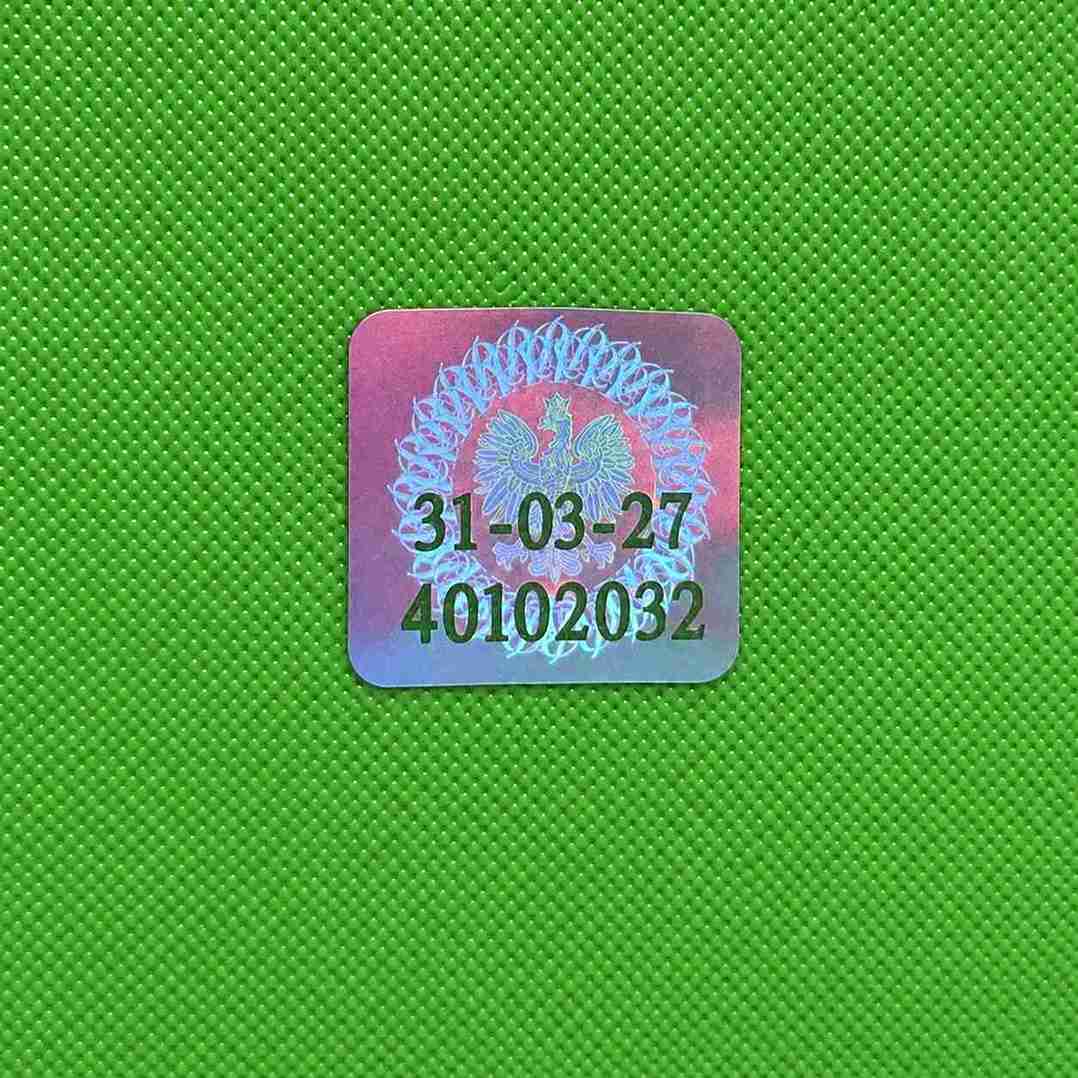
The offer includes holograms and collector stickers related to the Hugo Kołłątaj Agricultural University in Kraków. Primarily, the latest editions are available 31-03-27 i 31-10-26, as well as earlier back issues intended for those expanding their collection. The individual editions come in several design variants, allowing you to choose a single copy or collect successive versions chronologically.
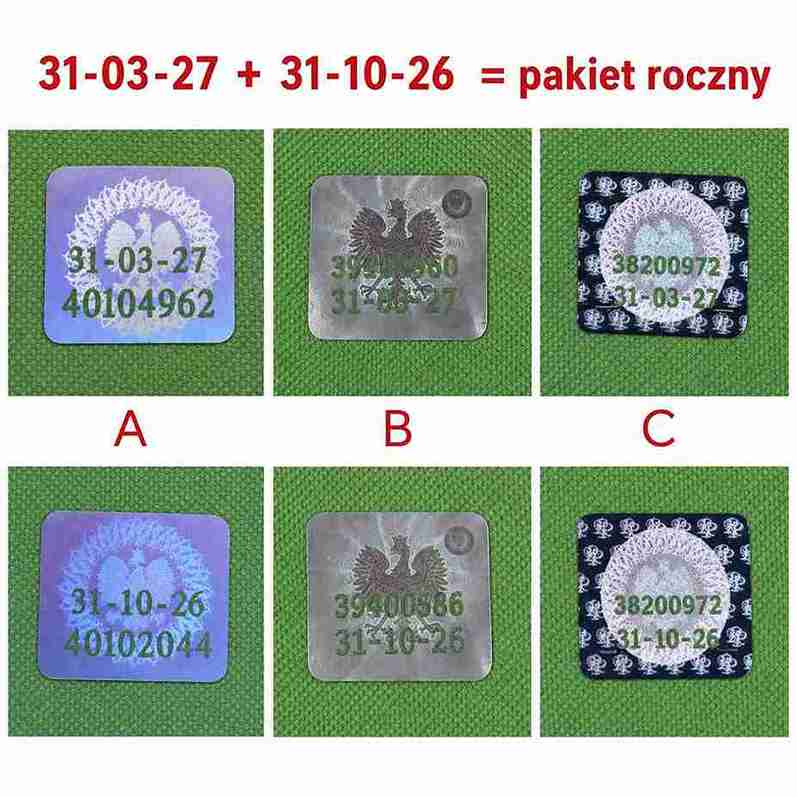
University of Agriculture in Krakow collector's hologram – available options
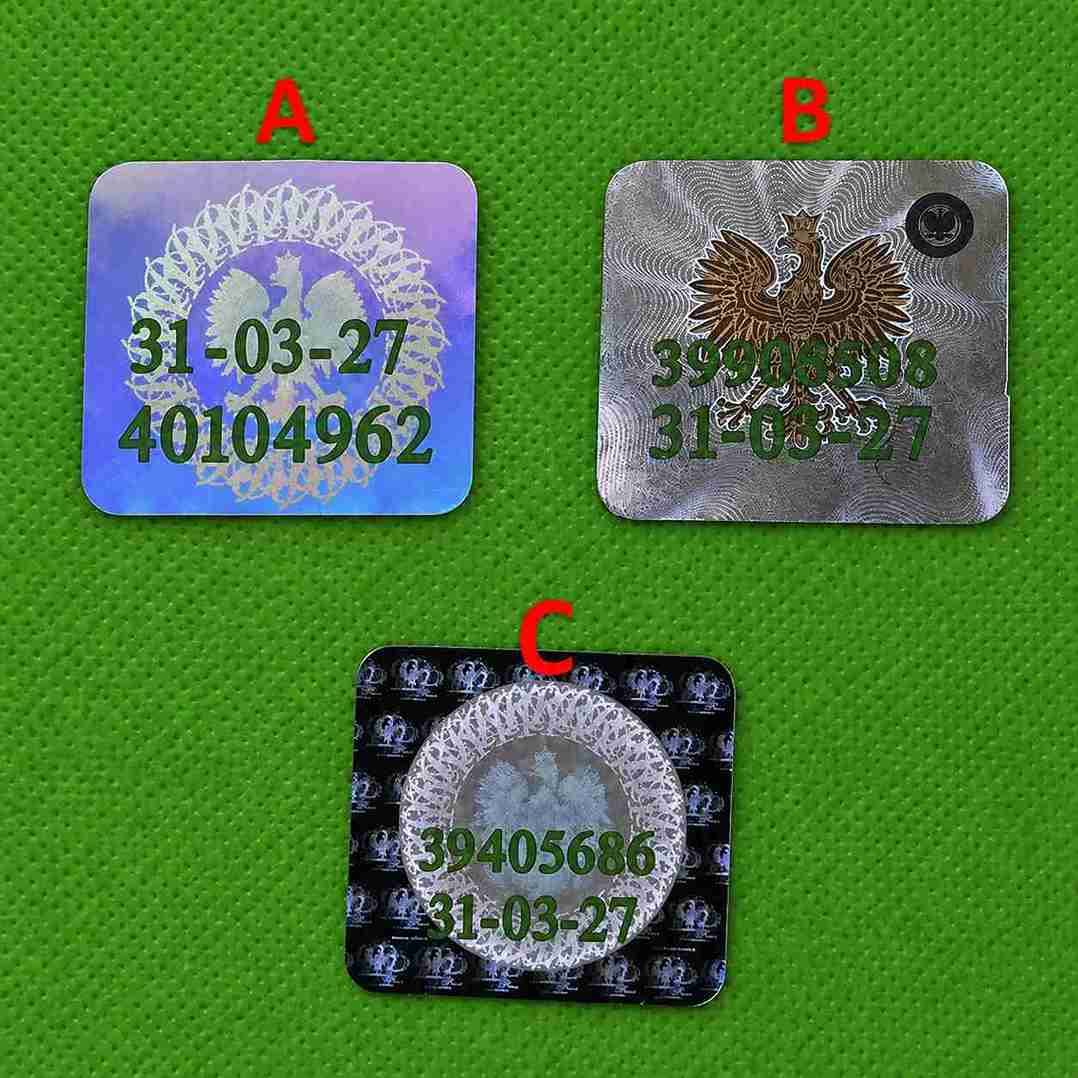
For the University of Agriculture in Krakow, we have prepared collector holograms in the current editions 31-03-27 i 31-10-26 and in older archival variants. Within a single edition, versions A, B, and C may be available, differing in compositional details and visual effect. This makes it possible both to choose a specific variant and to create a more extensive collection comprising several versions and vintages.
Associated with Z URK is a three-digit one university code 278. This is the designation assigned to the Hugo Kołłątaj Agricultural University in Krakow. Collector's copies are approximately in the format 10 × 9 mm and are made of thin holographic foil, which makes it possible to precisely reproduce small design elements.
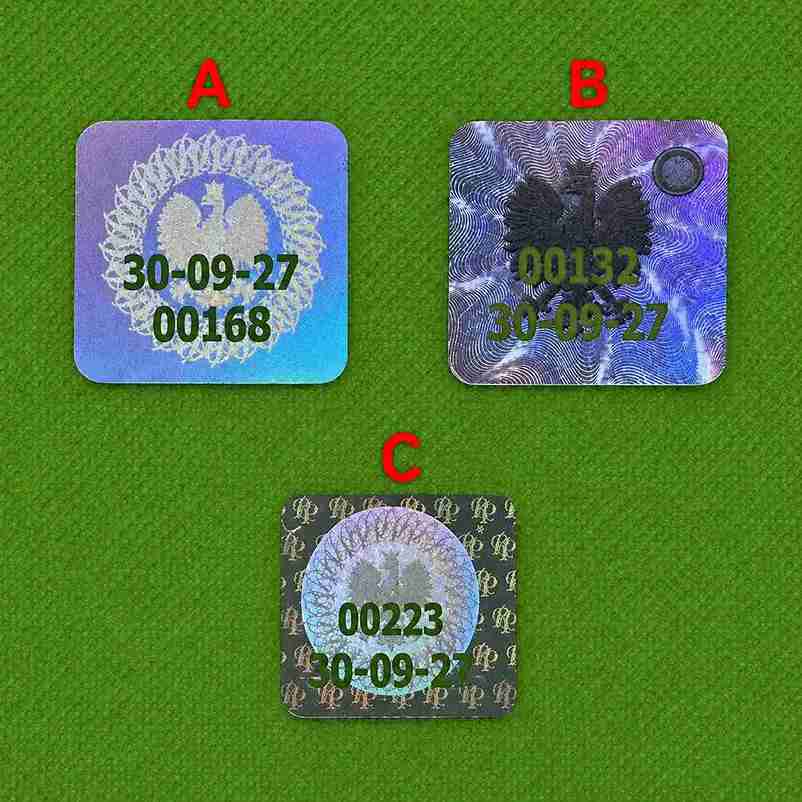

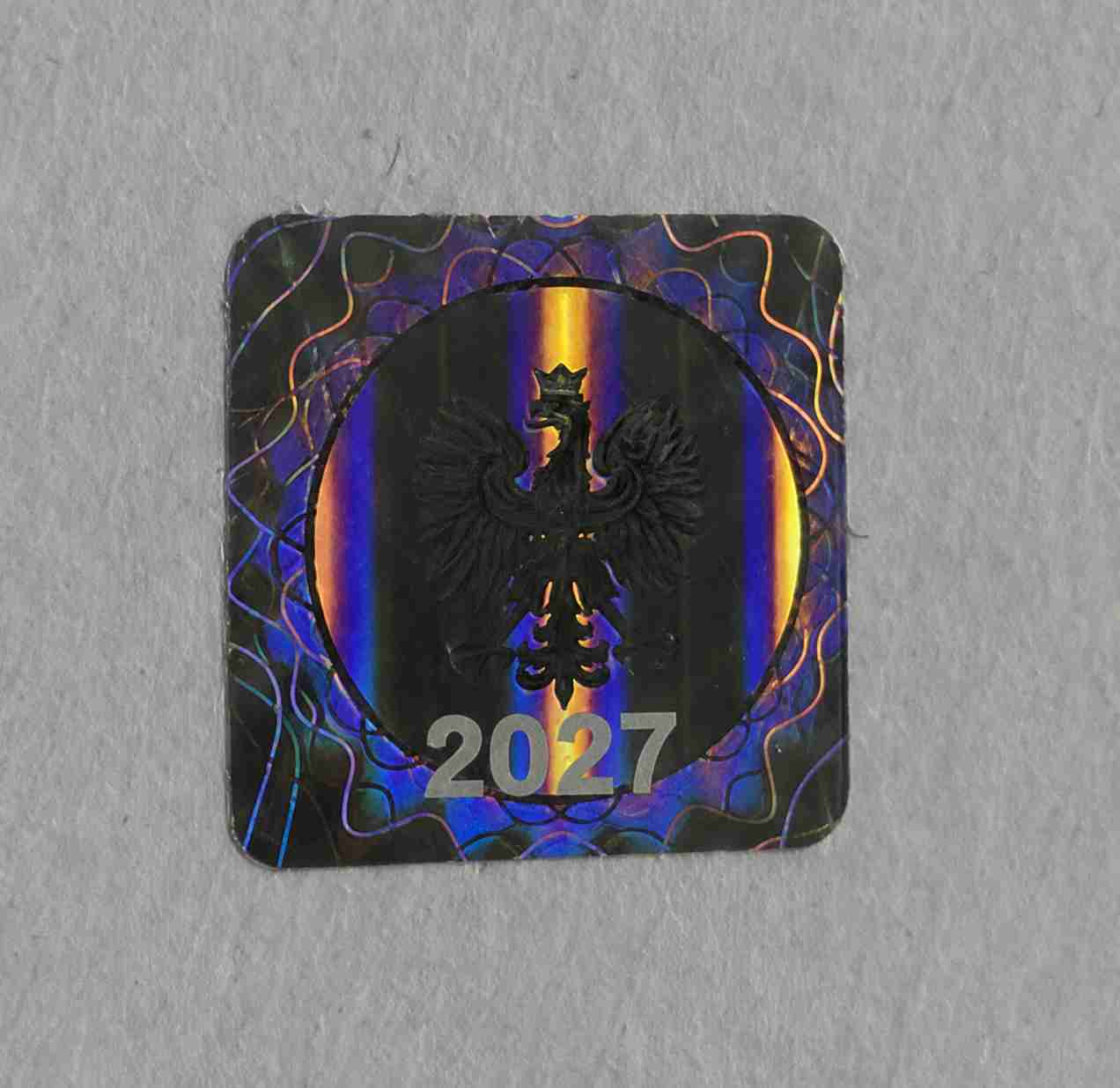
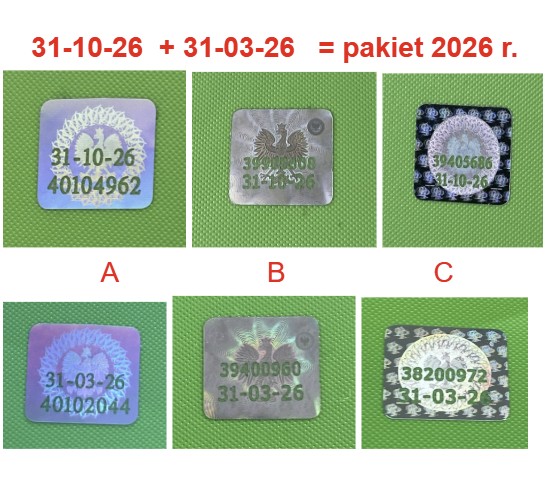
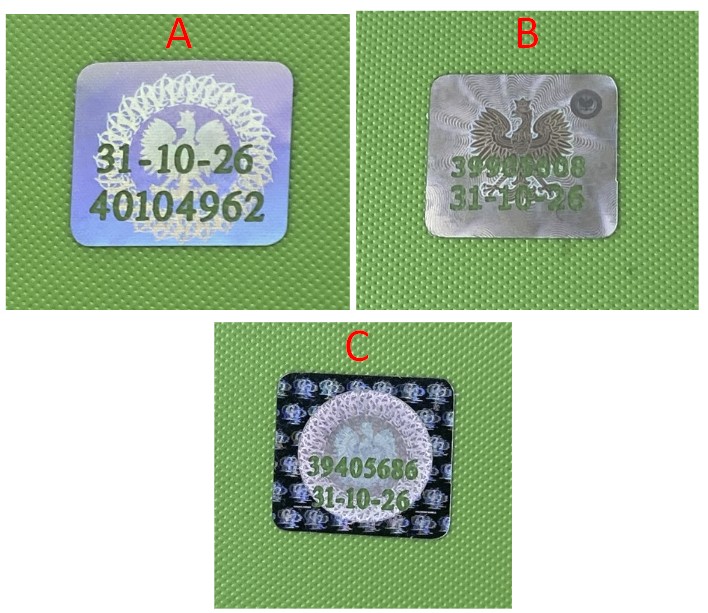
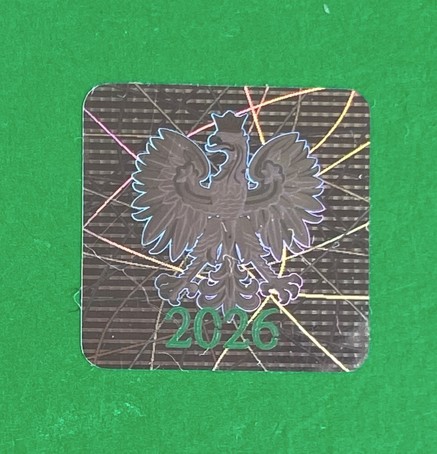
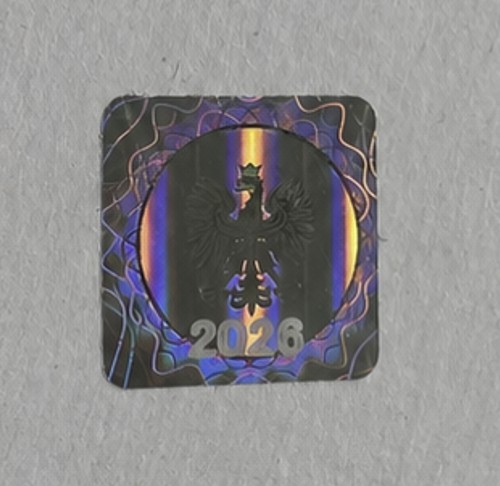
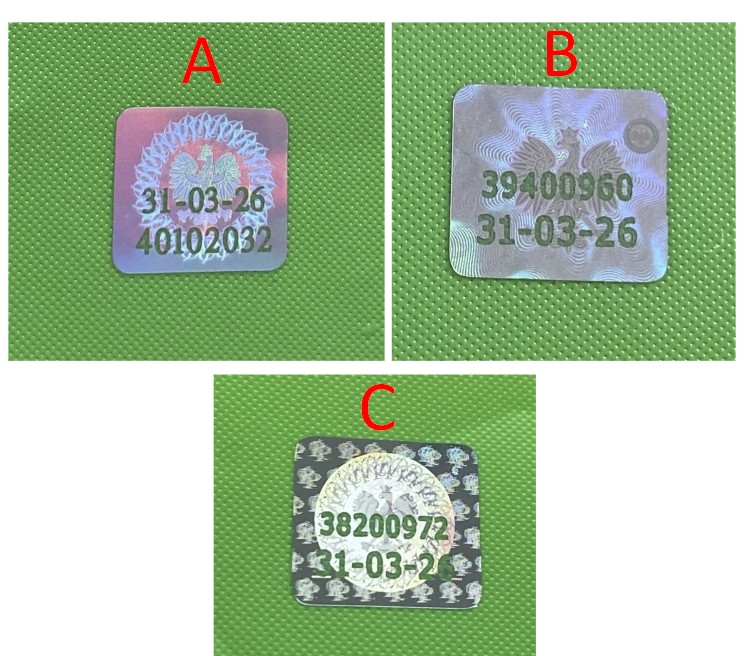
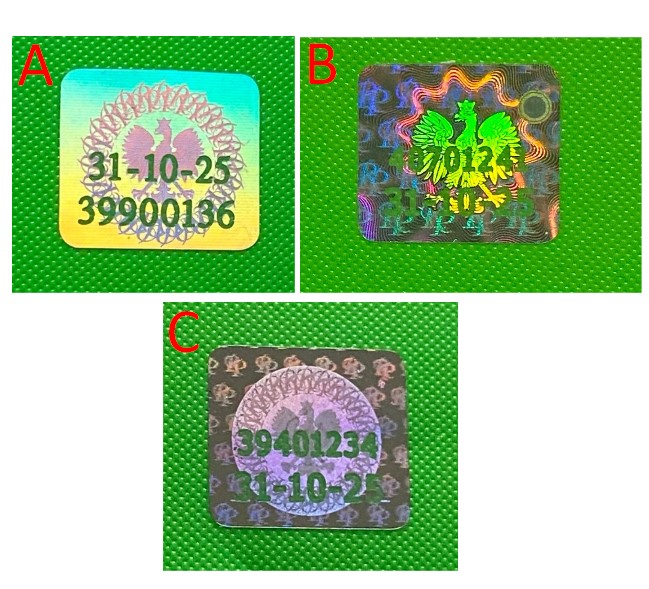
Collector stickers related to Agricultural University of Krakow
When it comes to URK collector holograms, it's not just the design itself that matters, but also method of surface finishing and achieving the optical effect. The technology we use allows us to maintain the correct proportions of the design, the layout of fine markings, the film structure, and the characteristic variability of the hologram visible from different angles.
Currently, we particularly highlight the editions 31-03-27 i 31-10-26. However, the collection can also be supplemented with older vintages and variants. A, B and C, selecting copies by date, graphic versions or several variants of the same series.
Each design is prepared with an emphasis on the precision of detail and visual consistency of a specific edition. The stickers offered are moreover of a strictly collectible nature – are not securities issued by the Agricultural University, do not confirm student status and are not used for extending the validity of student identity cards.
University of Agriculture in Krakow what is the university code?
The code of the Hugo Kołłątaj Agricultural University in Krakow is:
278.
This is a three-digit identifier assigned to the higher education institution and used in designations related to electronic student identity cards.
Collector holograms University of Agriculture in Krakow - price list
The price of the URK collector's hologram depends on selected edition, year and variant of the design. Below you will find the current price list for the available models, including the edition 31-03-27 i 31-10-26.
Student holograms
- 31-03-27 + 31-10-26 (2 hologram pack) £199.00
- 31-03-27 PLN 159.00
- 31-10-26 £99.00
- 31-03-26 £79.99
- 31-10-25 £49.00
- 31-03-25 £29.99
- 31-10-24 £29.99
- 31-03-24 PLN 30.00
PhD holograms
- 30-09-27 PLN 179.00
- 30-09-26 £99.00
- 30-09-25 £49.00
- 30-09-24 £49.00
- 30-09-23 39.00 PLN
- 30-09-22 PLN 20.00
- 30-09-21 PLN 20.00
School holograms
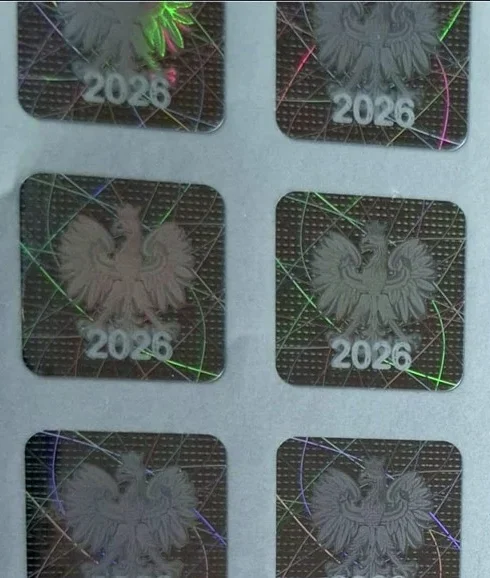
- 2027 £169.00
- 2026 £99.99
- 2025 PLN 59.99
- 2024 £49.00
How much is the delivery of collectible holograms for the URK in 2026?
Orders we dispatch daily by 17:00 via InPost – to Paczkomat machines and by courier.
- InPost Parcel Locker – £8.99
£12.99SPECIAL OFFER!!!* - InPost Courier – £15.99
- InPost courier cash on delivery – £17.99
*The promotional price of PLN 8.99 for InPost Parcel Lockers is valid until further notice and applies to all orders.
Order 24/7
We accept orders 24/7 online, by email and by phone. Please provide the delivery address and a contact number in your message. The cost of cash on delivery shipping must be added to the price of the hologram. We also offer the option of collection in person in Warsaw.
Original student ID holograms
The ELS stickers we offer are identical to those used at many Polish universities. They are made using 2D/3D technology, feature a laser-engraved expiry date and have the security features characteristic of this type of collectors' sticker.
Purchase security
We ensure prompt order fulfilment, the option of personal collection and the right to return the product. Once the order has been completed, the transferred data is deleted. We care about the security, privacy and efficient handling of every order.
100% Quality Assurance
Our ELS stickers are distinguished by their high quality of workmanship and aesthetics. They feature characteristic security elements, a transparent expiry date, RP markings, and a honeycomb effect that protects the hologram against reuse.
Right to return the hologram
If the purchased item does not meet your collecting expectations, you can exercise your right of return. Upon receiving the returned item, we will refund the full purchase amount in accordance with the applicable rules.
Holograms with serial numbers
Each ELS sticker features a serial number, a laser-engraved expiry date and distinctive markings. Thanks to careful craftsmanship and the security features used, it makes a valuable collector's item.
Check out our offer:
Contact us
If you have any questions about our products or need help choosing the right solution, please contact us. We are at your disposal by phone, email, and via the contact form.
- Collection in person – WARSAW (by prior arrangement of time and location)
- 24-hour dispatch (courier and parcel locker) – whole of UK.
How to choose the right collector's variant URK-related?
Variants A, B and C they relate to different visual versions of the same edition. They may differ in the layout of minor elements, the character of the background, the way the holographic effect is presented, or the placement of markings. As a result, for a single date, you can collect more than one specimen and treat the variant as a separate item in the collection.
If you are putting together the collection of the University of Agriculture in Krakow by year, a good solution is to collect A, B and C for the selected edition. When purchasing a single piece, however, you can be guided by a specific design and date – first and foremost the newest one 31-03-27, with editing 31-10-26 or one of the older year groups.
Current and archival collector's editions of the University of Agriculture in Krakow
The URK collection can be developed both from the latest releases and from copies originating from earlier years. Currently, a special place in the offer is held by 31-03-27 and 31-10-26, whilst those supplementing the older collection can also turn to the available archival editions.
At the same time, there is no need to limit yourself to a single sticker assigned to a specific date. Individual years may appear in several variants A, B and C, which is why the collection can be built in two ways: chronologically by successive editions, or more broadly – by collecting different versions of the design from the same period.
Holograms and collector stickers Hugo Kołłątaj University of Agriculture in Krakow
The University of Agriculture in Krakow is assigned university code 278. In collector variants associated with the URK, this marking constitutes one of the characteristic elements of the design, alongside the date of the specific edition and other graphic details.
Our holograms are approximately in the format 10 mm × 9 mm, and the film used has a thickness of 10–36 µm. As the only ones on the market, we use a production method matching the technology used in making this type of hologram. This allows for a clear optical effect, maintaining proper proportions and accurately reproducing the small details characteristic of the given version.
Every item offered has for collection purposes only. It is not a hologram issued by the Agricultural University, nor is it an official element confirming the validity of the student ID card.
URK collector holograms for students and graduates
For a graduate, an interesting starting point could be the year associated with the period they began or finished their studies, whereas people still connected with the university often start their collection with the most recent editions, such as 31-10-26 whether 31-03-27. In this way, a single hologram can become part of a larger collection referring to subsequent years spent at the URK.
When expanding the set, you can combine different dates and A/B/C variants. This allows you to create a collection encompassing both the latest editions and older copies associated with the Hugo Kołłątaj Agricultural University in Kraków.
Collector's variants related to the URK Doctoral School
A separate part of the collection consists of items modelled on the doctoral student identity card. This is a proposal for those who want to supplement their collection with the stage following first-cycle, second-cycle or uniform Master's studies and maintain the continuity of the entire academic set.
The Agricultural University runs a Doctoral School in many disciplines related to, among others, agriculture and horticulture, forestry, veterinary science, food technology, animal science, biological sciences, economics and engineering. Collector's doctoral variants remain a separate category from student editions and are available in accordance with the current store offer.
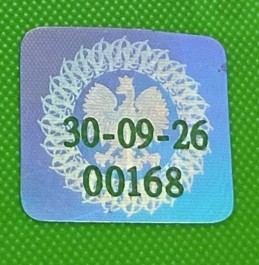
The collection includes PhD holograms with data 30-09-2027 and 30-09-2026, corresponding to successive academic editions. This makes it possible to choose a variant suited to the period represented in the collection or to gather both years as a complete series. Each of these editions is strictly of a collector's nature and is not an official designation issued by the University of Agriculture in Krakow.
How do we make student and PhD student ID card stickers?
With such a small format, details are of the utmost importance. The hologram is approximately 10 × 9 mm, which is why even small pattern elements, numbering, the date or changes to the optical effect must be reproduced with high precision. We use film with a thickness of 10–36 µm and technology allowing the preservation of the characteristic multi-layered nature of the surface.
This is not a regular print imitating a hologram. The quality of the final copy is determined by the film used, the method used to achieve the optical effects, and the precision with which the markings are made. Depending on the edition, versions A, B and C may be available, meaning that the differences between successive variants remain visible even within the same model year.
Ready-made stickers are intended for collector's purposes only. They do not replace the markings applied to official documents by the university.
Collector's item versus official student identity card of the University of Agriculture in Krakow
The official URK student identity card is a document issued by the university and serves to confirm student status. The hologram located on such a document is an element applied in accordance with the rules in force at the university.
The stickers we offer have a different purpose. They are collector's items, which visually resemble specific editions, but do not confirm student or doctoral student status, do not extend the validity of the document, and do not grant the right to discounts or other privileges. This applies to both the latest edition 31-03-27, older 31-10-26, as well as all archival volumes and variants A, B and C.
FAQ – collector holograms University of Agriculture in Krakow
The most frequent questions are about current editions, back issues, A/B/C variants, build quality and order fulfilment. Below we have gathered the most important information regarding collection holograms related to the URK.
How quickly do you dispatch orders?
Orders placed by 17:00 are dispatched on the same working day. Thanks to this, the latest editions as well, such as 31-03-27, can be granted without undue delay.
Can you collect the hologram in person?
Yes. In addition to shipping, there is also available collection in person in Warsaw. This is a solution for those who prefer to collect their prepared order without using delivery.
How accurately are URK collector holograms reproduced?
We place great emphasis on proportions, surface structure, optical effects and fine details of a given pattern. The applied production method makes it possible to achieve a highly visually faithful effect while maintaining a small format of approximately 10 × 9 mm.
Why do your holograms differ from typical collector stickers?
It is important manufacturing technology. We do not rely solely on a print that imitates a holographic effect – we use a manufacturing method corresponding to the technology used in making this type of hologram, which translates into the surface structure and the quality of detail reproduction.
Are different variants of URK holograms available?
Yes. Selected editions may appear as variants A, B and C. These are different visual versions of the same vintage, so you can order a single design or collect all the available variants.
Can I order an older edition?
Yes. Apart from the current ones 31-03-27 i 31-10-26 Earlier vintages are also available. The availability of specific dates depends on the current stock of individual variants.
Does a collector's hologram extend the validity of the student ID card?
No. Such a specimen has exclusively collector's item. is not a designation issued by the University of Agriculture in Krakow, does not confirm the status of a student or doctoral student, and cannot be used to extend the validity of the student ID card.
University of Agriculture in Krakow - what do you need to know?
The University of Agriculture in Krakow is a public academic institution whose profile today encompasses much more than classical agriculture. Education and research here combine, among other things,. veterinary science, forestry, biotechnology, food technology, geodesy, engineering, economics and environmental science. Below you will find the most important information about URK, its structure and the most characteristic areas of its activity.
University of Agriculture in Krakow – key information
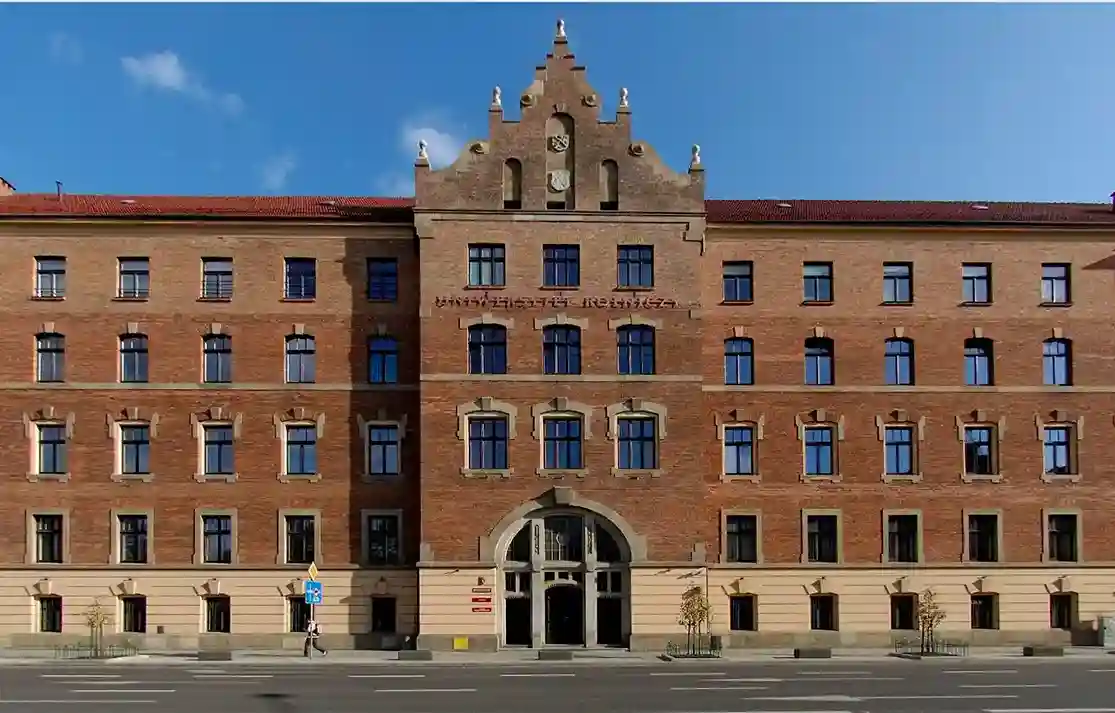
Today's Agricultural University has started independent operations 1st September 1953, although the traditions of agricultural education in Kraków are much older and connect the university with the Jagiellonian University. The seat of the URK is located at al. Adama Mickiewicza 21, and its current structure includes 8 departments.
- Full name: Hugo Kołłątaj Agricultural University in Kraków
- Registered office: 21 Adama Mickiewicza Avenue, 31-120 Kraków
- Foundation year: 1 September 1953.
- Profile: public academic university
- Patron: Hugo Kołłątaj
- Structure: 8 faculties, including the Faculty of Agriculture and Economics, the Faculty of Forestry, the Faculty of Food Technology, and the Faculty of Veterinary Medicine, which has been operating since 2024
What distinguishes University of Agriculture in Krakow
European Small Farm Research Centre
The Agricultural University runs the European Small Farm Research Centre, which deals with research into the functioning and transformation of small farms and rural development in Europe. The unit prepares analyses and expert reports, and also runs training courses and conferences related to this subject matter.
Agriculture 4.0 Research and Development Centre
Modern agriculture at the URK combines natural sciences with digital technologies and engineering. The Research and Development Centre for Agriculture 4.0 is one of the places where activities related to the development of modern agricultural production methods are carried out.
8 faculties and a very broad educational profile
URK is not limited to agricultural courses. The university's structure currently includes 8 faculties, covering, among others, forestry, veterinary medicine, biotechnology, food technology, geodesy, production engineering, economics and animal sciences.
Experimental Forestry Station in Krynica-Zdrój
The facilities of the Agricultural University extend far beyond Kraków. The Experimental Forestry Unit in Krynica-Zdrój provides conditions for conducting research, fieldwork and activities related to forest management.
Faculty of Veterinary Medicine since 2024
One of the most important changes in recent years has been the transformation of the JU-UR University Centre of Veterinary Medicine into the Faculty of Veterinary Medicine, which has been operating in this form since 1 September 2024. It is also the newest faculty in the current structure of the Hugo Kołłątaj Agricultural University of Krakow (URK).
Research also conducted in the field
URK uses specialist units outside typical teaching rooms. A good example is the Fishery Experimental Station in Mydlniki, which complements the university's extensive laboratory and research facilities.
What does it look like University of Agriculture in Krakow
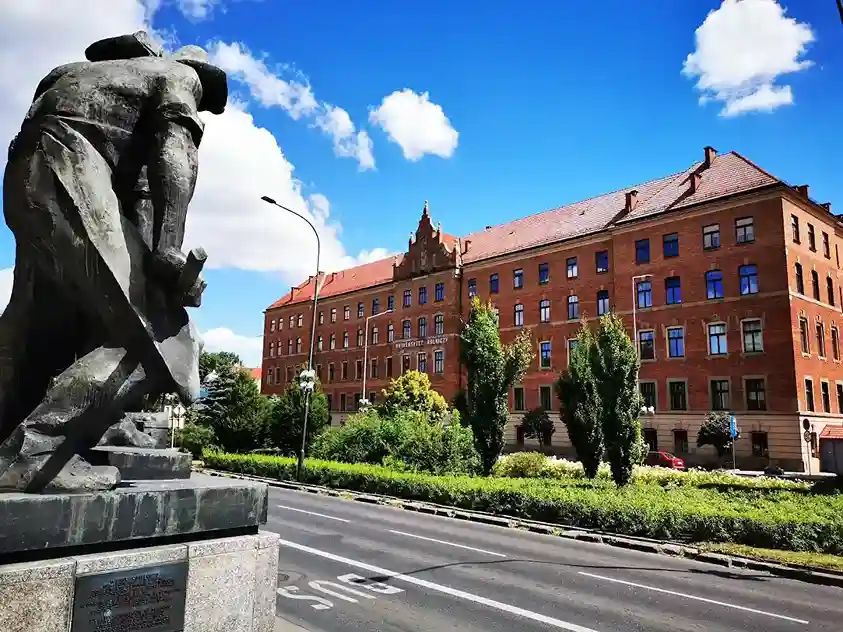
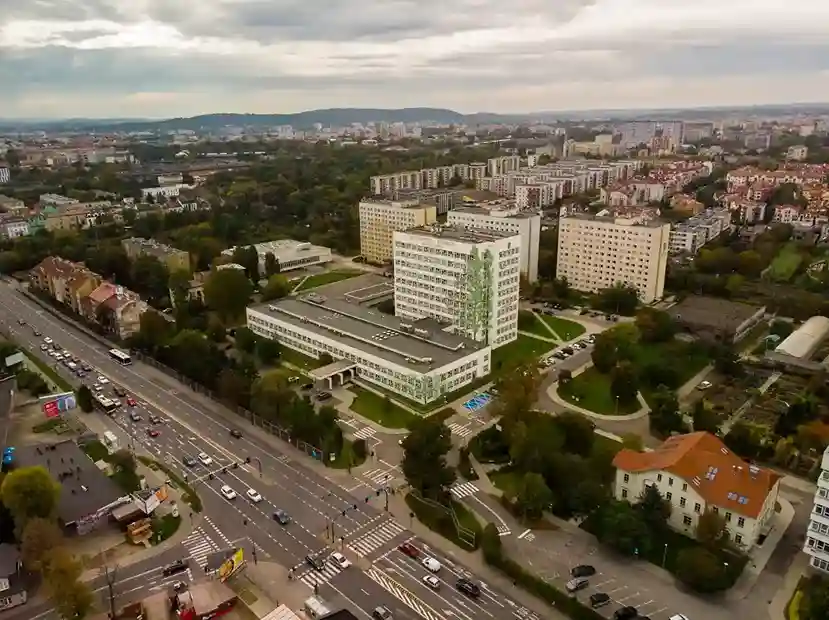
The Agricultural University does not form a single enclosed campus focused exclusively around a single building. Its main headquarters is located at 21 Adam Mickiewicz Avenue, whilst faculties, laboratories and research units operate in various parts of Kraków and outside the city.
The character of the URK is a good illustration of this very combination of a classic academic space with experimental facilities. Alongside lecture halls and laboratories, the university utilises field stations, research centres and facilities connected with forestry, animal husbandry, agriculture and environmental research. Thanks to this, a significant part of education and scientific work also takes place outside the traditional lecture hall.
History University of Agriculture in Krakow
1776
Hugo Kołłątaj's idea for academic agricultural education
Hugo Kołłątaj, preparing reform project of the Kraków Academy, he advocated for the establishment of a department of agriculture. Although the concept was not realised at the time, today's university named after him refers precisely to it.
1806–1809
the Department of Rural Economy functions
In the years The Department of Rural Economy operated from 1806 to 1809, representing one of the initial stages of academic education related to agriculture in Kraków. This event preceded the establishment in 1890 of the Agricultural Study Programme at the Faculty of Philosophy of the Jagiellonian University.
1890
The Agricultural Study of the Jagiellonian University is being established
was established at the Faculty of Philosophy of the Jagiellonian University three-year agricultural college. From this moment dates the continuity of university-level agricultural education in Krakow, from which the present URK originates.
1923
Agricultural Studies becomes the Faculty of Agriculture of the Jagiellonian University
After more than three decades of development, the Studium was transformed into Faculty of Agriculture of the Jagiellonian University. It was another step leading to the later autonomy of the Cracow Agricultural University.
1953
an independent Higher School of Agriculture is being established
Based on structures previously associated with the Jagiellonian University, it was established Agricultural University of Kraków. From 1 September 1953, the university functioned as an independent academic unit.
1972–1978
Agricultural Academy and patron Hugo Kołłątaj
In 1972, the former Higher School of Agriculture was named Agricultural Academy, and six years later it was named after Hugo Kołłątaj. The name Hugo Kołłątaj Agricultural Academy remained associated with the university until another major change in 2008.
2008
University of Agriculture in Krakow
11 April 2008. Agricultural Academy was renamed the Hugo Kołłątaj Agricultural University in Krakow. Since then, the current name of the university has been in use.
2024
new Faculty of Veterinary Medicine
Another important organisational change was the establishment within the structure of the KRU Faculty of Veterinary Medicine. From 1 September 2024, it replaced the former JU-UR University Centre of Veterinary Medicine and became the university's eighth faculty.
What is the admission process at the University of Agriculture in Krakow like?
Recruitment for the URK takes place electronically. The candidate registers an account in the admissions system, selects a degree programme, enters the required details and the results serving as the basis for qualification, and then tracks information regarding their application. Once qualified, all that remains is to submit the documents required for enrolment.
Admissions to the University of Agriculture in Krakow 2026/2027
Admissions for the academic year 2026/2027 covers first- and second-cycle full-time and part-time studies, as well as uniform Master's studies. In accordance with the rules adopted by the Senate of the URK, admissions for the winter semester commence no later than 1 June 2026. and can be led to 30 September 2026. However, the detailed schedule depends on the course and the specific admissions round.
If there are still vacant places after the main admissions round, the university may launch subsequent recruitment rounds. A separate schedule applies to the admissions procedure for the summer semester of second-cycle studies – in accordance with the rules for 2026/2027, recruitment may begin no later than 15 January 2027 and last until 5 March 2027.
What is the admission process at the University of Agriculture in Krakow like?
The first stage is registration in the URK online admissions system. The candidate creates an account, selects the desired course and level of study, completes the information required for the admission process, and pays the application fee to the designated account.
After the results have been calculated, the candidate receives information about the outcome of the procedure. Qualified persons must then, within a specified deadline, submit the full set of required documents. Failure to submit documents by the deadline is treated as resignation from further participation in the recruitment process.
What documents are needed during the recruitment process for the URK?
The complete set of documents consists of upon admission to university, by the deadline specified by the relevant recruitment team. The range of required attachments depends, amongst other things, on whether the candidate is starting first-cycle studies, uniform Master's studies or second-cycle studies.
- University application and personal questionnaire – signed documents generated from the electronic recruitment system.
- Educational certificate – for first-cycle or uniform Master's degree studies, this includes a copy of the document entitling the holder to undertake studies, with the original available for inspection. Candidates for second-cycle studies shall present a diploma of completion of prior studies.
- Electronic photography current colour photograph meeting the requirements for identity card photography, uploaded to the system.
- Additional documents, if applicable to the candidate e.g. documents of winners and finalists of Olympiads, confirmation of language proficiency for studies conducted in a foreign language, or documents required from candidates with a foreign school leaving certificate.
- Candidates for second-cycle studies may additionally be required to submit a diploma supplement or an appropriate certificate from the dean's office. The exact set of documents should always be checked for the chosen course of study and the current recruitment round.
Degree programmes at the University of Agriculture in Krakow
Today, the URK's course offering extends far beyond traditionally understood agricultural subjects. The university combines natural and veterinary sciences with food technology, engineering, geodesy, economics and modern areas of data analysis. Available courses include, among others:
- agrobiology,
- landscape architecture,
- bioinformatics and data analysis,
- animal bioengineering,
- bioeconomy,
- applied biology,
- biotechnology,
- construction,
- dietetics,
- economics,
- finance and accounting,
- geodesy and cartography,
- geoinformatics,
- water engineering and management,
- environmental engineering,
- forestry,
- environmental protection,
- gardening,
- agriculture,
- food technology and human nutrition,
- transport and logistics,
- veterinary medicine,
- viticulture and oenology,
- management,
- animal science.
Agricultural, natural science and veterinary courses at the University of Agriculture in Krakow
The profile of the Agricultural University is best seen in courses combining environment, food production, plants, animals and modern technologies used in agriculture. The most characteristic features of the university include:
- agrobiology,
- bioeconomy,
- animal bioengineering,
- applied biology,
- biotechnology,
- forestry,
- environmental protection,
- gardening,
- agriculture,
- food technology and human nutrition,
- veterinary medicine,
- viticulture and oenology,
- animal science.
A special place is held veterinary medicine, currently conducted as part of the Faculty of Veterinary Medicine, which from 1 September 2024 replaced the former JU-UR University Centre for Veterinary Medicine.
Recruitment Office Address
University of Agriculture in Krakow
21 Adam Mickiewicz Avenue
31-120 Kraków
Telephone and email
Telephone: +48 12 662 42 74 or +48 12 662 48 62
Email: rekrutacja@urk.edu.pl
Online recruitment
Information regarding recruitment, current courses of study, schedules, qualification rules and required documents is published on the official URK admissions website. Candidates also use the Online Candidate Registration system, through which subsequent stages of the university application are handled.
Recruitment page: rekrutacja.urk.edu.pl
Contact with the Admissions Office of the University of Agriculture in Krakow
Do you need a student ID hologram from the Agricultural University of Krakow?
Full-time and part-time studies at the University of Agriculture in Krakow
URK enables studying in both full-time and part-time modes. In the admissions 2026/2027 the offer includes 34 full-time first-cycle and uniform Master's degree programmes and 18 part-time undergraduate courses. The selection includes agricultural and natural sciences, veterinary medicine, engineering, food technology, geodesy, economics and management.
The range of courses varies depending on the form of study, so not every full-time programme has a part-time equivalent. This also applies to second-cycle (Master's) studies – before applying, it is worth checking the specific offer for the chosen course and semester of commencement.
Undergraduate and postgraduate studies at the University of Agriculture in Krakow
On many URK courses, you can follow the full path from first-cycle to master's studies. Depending on the programme, the first stage ends with obtaining the title of bachelor's or engineer's degree, whereas after second-cycle studies a graduate can obtain the title of magister or magister inżynier.
Not all courses have the same model, however. Veterinary medicine is run as a single-cycle Master's degree programme, and some second-cycle programmes are also aimed at graduates of related fields of study. Therefore, when applying for second-cycle studies, the previously completed degree subject and the requirements specified for a particular programme are important.
Degrees taught in English at the Agricultural University of Krakow
The English-language URK offer clearly demonstrates the international character of part of the education. Among the programmes published by the university are, inter alia,. International Master of Horticultural Science, Environmental and Plant Biotechnology, Renewable Energy Sources and Waste Management as well as courses related to food technology, quality and safety.
Particularly interesting is International Master of Horticultural Science – a four-semester second-cycle programme run in cooperation with the Agricultural University of Krakow, Mendel University in the Czech Republic, and the Slovak University of Agriculture in Nitra. The first semester takes place in Krakow, subsequent stages involve studying at partner universities, and the medium of instruction is English.
Doctoral School of the University of Agriculture in Krakow
After a Master's degree, further academic progression is enabled by University of Agriculture in Krakow Doctoral School. Her profile is broad and reflects the interdisciplinary nature of the university – from agricultural and forestry research to engineering, economic, biological and veterinary sciences.
Training is conducted in 10 disciplinesforest sciences, agriculture and horticulture, food technology and nutrition, zootechnics and fisheries, civil engineering, geodesy and transport, mechanical engineering, environmental engineering, mining and energetics, economics and finance, biological sciences and veterinary science.
Admissions to the URK Doctoral School
Admission to the Doctoral School of the University of Agriculture takes place by means of a competition held within individual disciplines. The candidate chooses an area consistent with their research plan, and the results of the competitive selection procedure are public.
A detailed schedule is published separately for each recruitment round. Candidates should pay particular attention to registration deadline, research topics, required documents and evaluation rules in a specific discipline.
Students and doctoral candidates of the University of Agriculture in Krakow
The URK community is made up of undergraduate and postgraduate students, students on uniform Master's degree programmes, and doctoral candidates conducting their own research projects. As a result, university life is not limited to teaching classes – it also encompasses conferences, scientific projects, student government activities, academic culture and faculty initiatives.
Students have their own Student Union of the Agricultural University, whose representatives participate, among other things, in the work of university bodies and represent the interests of the student community. Doctoral students, on the other hand, operate within the Doctoral School and conduct research in disciplines corresponding to the scientific profile of the URK.
Student life at the Agricultural University of Krakow
URK has its own places and organisations that shape academic life outside the lecture halls. One of the most recognisable points is „Arka” Academic Club”, currently operating at 3 Zenon Klemensiewicz Street. It is a space associated with cultural events and student activity.
Artistic ensembles are also associated with the university, including the Agricultural University Choir, the „Skalni” Student Highlands Ensemble, and the „Hagard” Hunting Horn Players Ensemble. Such a profile suits the URK well – alongside technical and natural science research and education, the university preserves its own academic and cultural traditions.
Academic clubs and student organisations at URK
A large part of students' academic activity takes place in student societies operating within individual faculties. Their projects concern, among other things,. of plants, the environment, animals, food technology, forestry, geodesy or engineering issues, meaning areas directly related to the specialisations of the Agricultural University.
Students also present the results of their work outside the university. In 2025, URK student societies participated, among other things, in international student seminars and symposia dedicated to relations environment–plant–animal–product.
Halls of residence of the University of Agriculture in Krakow
URK has at its disposal with four halls of residence located in several parts of Kraków:
- Hall of Residence I „Bratniak” – 10/12 Jabłonowskich Street,
- Hall of Residence II „Młodość” – 68 Urzędnicza Street,
- Hall of Residence III „Oaza” – 29 Listopada Ave. 48c,
- DS IV „Czwórka+” – 48b 29 Listopada Ave.
„The ”Bratniak" is located in the city centre and offers single, double and triple rooms with en-suite bathrooms, as well as kitchens, a laundry room, quiet study rooms, a gym and a sports hall. In turn, „Oaza” and „Czwórka+” are located near the teaching facilities on Al. 29 Listopada, near the Faculty of Forestry, the Faculty of Biotechnology and Horticulture, and the „Arka” Academic Club.
Campus of the University of Agriculture in Kraków
In the case of the URK, it is difficult to speak of a single cohesive campus. The university uses several large complexes of buildings scattered across Kraków. The main headquarters is located at 21 Mickiewicz Avenue, other important facilities are concentrated along al. 29 Listopada, and expanded teaching and laboratory infrastructure also operates on ul. Balicka.
Al. 29 Listopada is home to buildings including Faculty of Forestry and Faculty of Biotechnology and Horticulture, while the complex on Balicka Street includes the facilities of the Faculty of Production and Power Engineering, laboratories, and the Wójcicki Collegium. Such a dispersed layout corresponds to the specific nature of URK, whose activities require not only lecture halls, but also laboratories, greenhouses, research stations, and field facilities.
FAQ – University of Agriculture in Krakow
Do you have questions about URK, university code, current collector editions or the Doctoral SchoolBelow we have gathered brief answers to the issues that most frequently arise when choosing a university and holograms related to the Agricultural University of Krakow.
What is the university code for the University of Agriculture in Krakow?
The code for the Hugo Kołłątaj Agricultural University in Krakow is 278. It is a three-digit identifier assigned to the URK.
What editions of URK collector holograms are available?
The selection consists primarily of the latest editions 31-03-27 i 31-10-26, as well as earlier collector's editions. Selected editions may be available in variants A, B and C.
Are holograms related to the URK Doctoral School available?
Yes. The offer also includes collector's variants referring to PhD student ID card, e.g., 30-09-27 or even 30-09-26. They form a separate category from student editions and allow you to expand your collection with the next stage of your academic path.
Is a collector's hologram the same as an official university sticker?
No. The offered item is a collectors' item. It is not a designation issued by the URK., does not extend the validity of the student ID card and does not confirm student or doctoral student status.
How many faculties does the Agricultural University of Krakow have?
The Agricultural University currently has 8 departments. The youngest of these is the Faculty of Veterinary Medicine, which has operated in this form since 1 September 2024.