
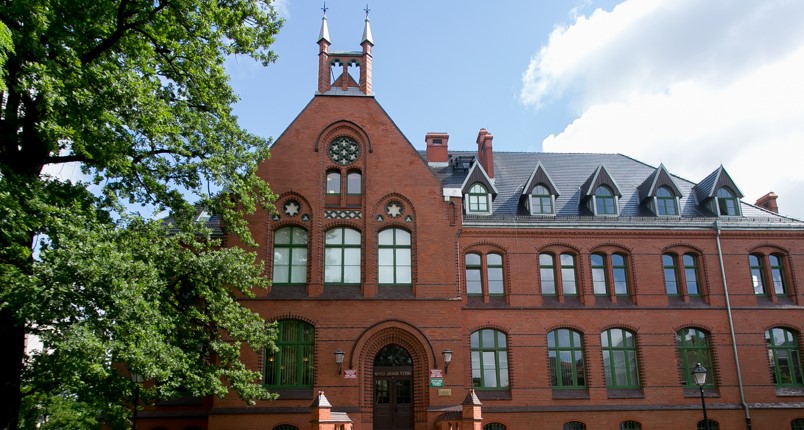
The Medical University of Śląskie in Wrocław (UMWr) is a higher education institution with a medical profile that has existed as an independent university since 1950. However, its tradition dates back to the early 19th century, when the Wrocław University was established in 1811, which included the Faculty of Medicine – the foundation of the current Medical University. The university provides education for doctors in various specialties and medical staff. Currently, the Medical University of Wrocław consists of 5 faculties – the Faculty of Medicine, the Faculty of Medical and Dental Sciences, the Faculty of Medical Sciences
Graduate School, Faculty of Pharmacy with a Department of Medical Analysis and Faculty of Health Sciences.
At the university, you can study first and second degree programs in 10 different fields in Polish and 2 in English, postgraduate studies within the Faculty of Medicine, and doctoral studies. The university conducts and participates in numerous studies related to health protection and environmental protection. The university is the founding body for two clinical hospitals – the University Hospital
Clinical and Independent Public Clinical Hospital No. 1 in Wrocław. Practical classes for students are also held there. The Medical University publishes specialized scientific journals. International cooperation is being developed, e.g. within the Erasmus+ program.
The recruitment schedule, rules and other necessary information for candidates applying to study at the Medical University can be found on the university’s website. Recruitment takes place online via the IRK – the Internet Candidate Recruitment System. Candidates are evaluated based on their results from the maturity certificate in all subject areas required for the chosen study program. Payment of the recruitment fee is required.
Electronic Student ID ELS is a system for identifying students’ identities. The ID is issued after being admitted to study and paying the appropriate fee. It confirms the student status and entitles the holder to use student discounts and benefits. The validity period of the ID is one academic semester. To update the document, you must visit the dean’s office after getting the stickers attached to the ID. ELS holograms are received twice a year.
Collectible holograms are popular among students across the country. There are also collectors at the Medical University in Wrocław who meticulously collect stickers for the ELS credentials. Most often they collect hologram stickers, that is, the ones issued by the dean’s office, only in a collectible version. This is a great souvenir of the study period for them. Anyone can get involved in collecting holograms, not just students – see what a great hobby this is and collect els stickers for your class!
Among all Polish medical universities, one of the more well-known is the University of Medical Sciences named after Piastów Śląskich in Wrocław. Although this year marks its 70th anniversary, its roots date back to the 19th century, to the beginnings of the University of Wrocław, when the two schools were united. In its current form, the university provides education for doctors in various specialties and medical personnel. It consists of 3 departments – the Faculty of Medicine, the Faculty of Pharmacy, and the Faculty of Health Sciences. The ELS UMWr student card is a symbol that attests to belonging to one of the best medical universities in Poland.
Although currently Polish universities – not only medical ones – hand out modern symbols of belonging to the student community such as a student ID card, a sticker and an index to their students, this has not always been the case. The history of the Medical University of Wrocław dates back to 1811, when the index was the most important attribute of the young people being educated. As a result of the Humboldt University reform, King Frederick William III, by order of the cabinet of 24 April 1811, moved the university from Frankfurt am Main, called Viadrina, to Wrocław, connecting it with the Leopoldian Academy. In this way, the University of Wrocław with its Faculty of Medicine was established; its first rector was a physician, Professor Karl August Wilhelm Berends. From the very beginning, the Faculty of Medicine had five departments: anatomy, physiology, internal medicine, obstetrics and surgery. The Second World War and the recognition of Wrocław as a fortress led to the University of Wrocław being moved to Dresden. After the war ended, after 133 years of activity, the German university practically ceased to exist. On August 24, 1945, the Wrocław University of Technology was transformed into the Polish Academic Schools under a decree of the Council of Ministers and the Presidium of the National Council of the Republic. After years of reconstruction in Wrocław and the return of students to the Polish Academic Schools at the turn of 1949/1950, by a decree of the Council of the Ministry of Education of 24 October 1949, the Faculty of the University and the Polytechnic and the Department of Pharmacy and Stomatology were transformed into the Medical Academy, originally named the Medical Academy. After a few days, the new university adopted the name „Medical Academy in Wrocław”. The Department of Pharmacy became the Faculty of Pharmacy, and the Department of Stomatology retained its original name. The official date of the creation of the Medical Academy is January 1, 1950. These were the times when holograms on the ELS student ID card could more closely resemble black magic than the nearby złconvenience store. Stickers on student ID cards, Allegro, Google, and other things without which we struggle today are indeed the children of the 21st century. So let us return to the times before the sticker on the ID card was a mandatory item of equipment for the student, who considered the index to be the most valuable of his treasures. 20 years after the establishment of the Medical Academy, in 1970, institutes were established in the Faculty of Medicine and teaching departments were abolished. The institutional organizational structure survived until 1982, when the departments, clinics, and facilities were restored. In 1978, the Faculty of Nursing was established, and a year later the Department of Medical Analysis was established. In 1989, when Poland was undergoing great changes, the university was renamed the Medical Academy named after Mikołaj Kopernik. Piastów Śląskich at Wrocław.
28.06.2012 The Sejm of the Republic of Poland adopted a law renaming the Piast University of Silesia in Wrocław as the „Piast University of Silesia”. Although the transformation and continuous modernization of the complex began earlier, in 2012 the university could already be called a modern university, rather than the Academy. The authorities gradually began implementing electronic solutions – not only the university’s website was expanded, but ELS holograms were also introduced, which – after being placed on the student ID – provide information about belonging to one of the best Silesian universities. Although most of the information is encoded on the student ID, which is renewed after each semester, it is the sticker on the student ID that provides third parties with information about the document’s validity, and therefore the right to use student discounts. With the increasing digitalization, the time has come to introduce recruitment, which also takes place online. All you have to do is register on the university website through IRK – the Internet Recruitment of Candidates. Candidate qualifications are determined based on the results from the maturity certificate for all subject areas required for the chosen field of study. Obtaining a student hologram is easier than a student ID. Buying such a document is illegal, but on the market you can find the opportunity to purchase collector holograms. What are they? How do collectible stickers differ from the ELS sticker?
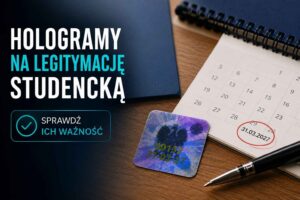
After completing their studies, the former student’s hand is essentially left with only a diploma and notes that over the years disappear from view. Stickers, student ID cards and other student attributes are handed over to the school’s secretary, even if we really want to keep them. So what then? How to get something that will remind us of the wonderful times of being a student? The solution is collectible holograms for student ID cards. Before you know what they are and how they look, it’s worth considering what the original ELS hologram looks like—in other words, the sticker for a student ID card. It’s a small square that is placed on the document at the start of each subsequent semester. The necessity to attach a new ELS hologram to each document stems from the fact that certain information is contained on each of them. Apart from the eagle, which is common to all student holograms in Poland, these are the serial number characteristic of each university (each university has its own), and the validity date of the ID card. The hologram/sticker therefore extends the validity of the ID card for each subsequent semester. The hologram/sticker, therefore, is in a sense inseparable – none of them is valid on its own. Only when combined do they form a whole; let us now turn to the question of what collectible holograms are. Reviews on the internet are positive, but they do not always accurately describe what they are and what they are for. A collectible hologram looks identical to those that appear on the student ID – it has a serial number corresponding to the university – we offer holograms corresponding to each Polish university – and a validity date. For people who have already completed their studies, the collectible holograms with archival validity dates corresponding to their years of study will be a pleasant surprise. However, we also have student holograms with a validity date of 31.03.2020, which will surely delight current students after they have completed their studies. So how do the ELS holograms differ from collectible holograms? These latter should not be used to apply for discounts and student rights. They are intended solely for collectible purposes.
Check out our offers now collectable holograms on student ID cards els The University of Medical Sciences in Piastów Śląski in Wrocław with a validity date of 31.03.2020.
See also:
Student holograms
ELD collectible holograms
The Hologramykolekcjonerskie24.com editorial team has been specializing in the topic for over 10 years. collectible holograms and patterns related to educational documents. We are preparing practical guides on ELS student holograms, doctoral ELDs and school-based ones, and their dates, variants, safeguards, and histories.
The published content is based on reliable sources regarding the Polish education system, applicable legal regulations, regulations of the relevant ministries, and official information provided by universities, schools, and public institutions. We regularly update the materials to reflect changes in regulations, document templates, and policies applicable in Polish education.
The website is informational and collector-oriented and is not affiliated with any university, school, ministry, or other public institution.